Thursday, July 11, 2013

Some of the Grasses


Forty years ago and more, I read a line in James Beard's classic American Cookery that was very permission giving. "I loathe divinity," it said.

What a great line, and think how many directions it could take: you could use it to start a lively theological debate. You could borrow from it the freedom to express your real opinion about something, straight from the heart, no good manners needed. You could see it as a lively way to knock an American institution right off its stupid pedestal. You could even see the irony in making such a statement in a cookbook right before you offer a recipe for divinity itself - Beard was talking about the old-fashioned fudge, of course.

Let's try it here: I loathe lawns. I felt this way long before I read "Why Mow?" in Michael Pollan's Second Nature.

To me, lawns represent the worst of western civilization's urge to "tame" nature, coupled with the insane and ultimately destructive belief that we have been granted dominion over the earth. Even when I am in a good mood, to me a lawn states nothing more interesting than, "We are people who have enough money to waste precious water, introduce harmful chemicals into the environment, and easily afford the labor of people who will never live next door to us in order to cultivate this green, isolating oasis onto which we thoroughly discourage anyone except ourselves from stepping."

I loathe lawns.

If it were up to me, I would eradicate every blade of lawn grass from every square inch of my property; I have, in fact, uprooted quite a bit in my time. However, I am not the boss of everything in my little piece of the universe. Floyd and Travis like to have a play space. If we didn't live in suburbia, their play space would be covered in whatever nature happened to have on hand. But in our neighborhood, the conversion to ethical and affordable landscapes is happening slowly, for which I am sorry. (Meanwhile, I manage to withhold water from the St. Augustine that came with the house, and wait.)

Even as they make the conversion, our neighborhood authorities seem more in favor of either lawn grass or all rocks, neatly manicured and geometrically arranged, plants sticking up from the decomposed granite as if laid out on graph paper - certainly not encouraging homeowners to return their surroundings to a natural state.

I must admit that little plots of "native grasses" are finally being encouraged, which is a great thing, as they are quite lovely and balletic. You see them as part of a larger landscape, interspersed with shrubs or boulders.


I love this variegated number, above. Dark, dark green and near-white fronds.


One street where I walk with Travis has a number of homes where native grasses have been introduced into that nameless space between the sidewalk and the road - you know that space where the sprinkler water has to be pointed like a water pistol or you end up sending $$$ running down the gutter? That's a perfect location for drought-loving plants. When we walk that street on a breezy evening, the whole block seems to shimmer.


Any of the native grasses would make a wonderful addition to my own sidewalk garden, I think. (In the torrid days of summer our thoughts turn to the next stretch of time when planting perennials makes sense - for us, that's autumn.) Even as I write this I am contemplating a complete re-do of that side of the house - pull out everything except the great huge Nelly Stevens holly and put native grasses all along the foundation. (Now I have to figure out a way to keep Floyd from reading this post, since pulling out shrubs involves a chain and the welding truck.)

But to me, planting clumps of native grasses, no matter how lovely or how drought-tolerant, still falls in the category of people-with-money-embroidering-the-landscape. Why go to the trouble and expense just so you can subscribe to a slightly different middle-class convention? Why can't we live with what grasses blow into our region on the wind?


All around my neighborhood there are wild places just beyond where the sidewalks end, and even with the tiny bit of rain we had this spring they came up beautifully. Then they went to seed beautifully.


What makes  "weed" a "weed," and a "lawn" a "lawn?" Merely our perceptions.


The colors turn spectacular as summer bears down.


Look at those layers of color, the wheaty shades against the rough green grass in an undeveloped area where people walk their dogs, and the deer come to graze. To me, these wild grasses are lovely when they come up, turning green overnight whenever we are fortunate enough to have rain; they are lovely with wildflowers strewn all through them; lovely when they go to seed.

And while we lawn-owners have been mowing, edging, and trimming every week since February, the wild grasses are only being mown now - one pass with the giant mowers to reduce the wildfire danger and that's it. They'll be gold, crisp, and sharp till the next rain, then make an immediate comeback all on their own.

What more should we ask of a lawn?


Sunday, July 7, 2013

Rocks

Our neighborhood has a website, of course, with a conversation space called "The Back Fence." It bears the typical messages about traffic, Christmas package thievery, problems with the swimming pools, and lost & found quadrupeds. Along with these come some that might not be typical in your neighborhood: sightings of coyotes, rattlesnakes, coral snakes, tarantulas - stuff like that.

Although the 'hood also has a Buy & Sell Facebook page, sometimes things show up on The Back Fence that people are trying to find or give away; and recently news of a treasure trove was posted:

I have about 40 small to medium sized boulders and around 10 containers of small to large rocks sitting in our front yard. Please feel free to take as much or as little as you might want. These would be good for anyone needing fill or doing xeriscaping. Many of the rocks have fossils and crystals also. 

I'll leave this on the message board this weekend and then put it on Craigslist on Monday if no one takes them. 

No need to call or ring the door. You may take the containers if you also take the rocks. 

I jumped in the car and drove over to scope out the situation. It took me two drive-bys to finally discern the front yard offering what proved to be several dozen good-sized rocks ranging in the one- to two-foot diameter size, of the nice white and rust colors of our local foundation. Even the smaller ones would have been too much for me to carry from the corner of the front yard to the truck, though, so I let the whole enterprise go.

A few days later a note appeared on The Back Fence to ask whether the rocks had already been taken, and my competitive spirit took over. What if this opportunity evaporated? I asked Floyd to come with me and help bring some home. Knowing exactly what I meant by "help," he agreed and was even supportive enough of his ridiculously shy wife to knock on the rock owner's door to make sure we were helping ourselves to the right collection.

The man of the house came out with great enthusiasm, ready to help hoist even the largest specimens onto the back of the pickup. Floyd made mention of a kind of jack-with-a-platform he uses at the welding shop, and I hurried to assure him that it would be fine to wait until we had such a mechanical advantage. Meanwhile the man was ushering us into his back yard to see the real collection.

It looked as if the earth had spewed out tons of boulders in back of his house.


"You're standing on a fault line," he said to me. I looked down at my feet. "My wife's a geologist and I showed her some of this orange stuff," he went on, showing me a little ball of something. "She said, 'That looks like material from a fault line.' Sure enough, that's the Balcones fault line right there!"

According to a very cool website apparently linked to The University Of Texas at Austin called "The Geologic Wonders of Texas" http://www.beg.utexas.edu/UTopia/centtex/centtex_what.html,

Faulting occurred in Central Texas millions of years ago, when the coastal plains to the east bent downward while the more stable Central Texas interior of the Llano Uplift remained relatively stable. The Balcones Escarpment and the West Austin Hill Country are a result of this fault episode.

The east side of Austin moved downward by as much as 700 feet. After millions of years of erosion, the soft sediments in the Hill Country area were eroded away, exposing the hard, Lower Cretaceous limestones and dolostones.

Obviously, a great deal of limestone and dolostone work had been done, all by this gentleman, all with equipment like come-alongs and rope. It made me wonder why people on that end of our neighborhood ever pay money for landscapers to bring them rocks - which I have seen them do - when their own yards are teeming with them.


His plan was to frame a backyard landscape that will ultimately consist of flagstone walkways and raised beds; I am very eager to see the result. Meanwhile he has managed to sort tons of stone by size and color, "not one not beautiful," as the last line of one of my favorite poems reads.


He showed us a dozen enormous bins filled with smaller rocks, similarly sorted by size. I had to admit that I would probably have developed the same hobby if our back yard opened onto the woods as his does, but with nowhere near his energy and thoroughness.

I kept thinking about John McPhee traveling the country with one expert geologist after another in preparation for writing the essays that would become his book Annals of the Former World. It is a hefty tome, made readable to ignoramuses like me purely by dint of McPhee's literary genius. And speaking of favorite lines, another of mine comes directly from that book:

The Himalaya is the crowning achievement of the Indo-Austrailian Plate. India, in the Oligocene [era], crashed head-on into Tibet, hit so hard that it not only folded and buckled the plate boundaries but also plowed in under the newly created Tibetan Plateau and drove the Himalaya five and a half miles into the sky. The mountains are in some trouble. India has not stopped pushing them, and they are still going up. When the climbers in 1953 planted their flags on the highest mountain, they set them in snow over the skeletons of creatures that had lived in the warm clear ocean that India, moving north, blanked out. Possibly as much as twenty thousand feet below the seafloor, the skeletal remains had formed into rock. This one fact is a treatise in itself on the movements of the surface of the earth. If by some fiat I had to restrict all this writing to one sentence, this is the one I would choose: The summit of Mt. Everest is marine limestone.

If you are unfamiliar with the work of John McPhee, please do yourself a favor and remedy that situation as soon as you humanly can. He recently had a piece in The New Yorker about how he writes, and it's a wonder. If John McPhee wrote telephone books, I swear, they would be dazzling.

Back in Austin, Floyd and our neighbor loaded several good-sized rocks onto the truck, with the promise that we'd come fetch more when we had the jack. Yesterday, after Floyd came in from his usual 60-mile Saturday hill country bike ride, he was kind enough to give a big chunk of his afternoon to his unruly gardener.


I'm telling you, welders have some of the coolest stuff. One category of their cool stuff includes an array of equipment designed to move things no mortal can lift. The "duct jack" (formally known as a "material lift" in case you are shopping for one at some fancy place) is like a wind-up forklift/dolly combination. If I were our neighbor moving all those rocks, I would certainly have one - although knowing my husband as I do, if that were our back yard we'd have a real forklift the size of a wee Bobcat - this is because welders have the coolest stuff. 

I was a little too busy running around trying to be "helpful" to get many good pictures, but in next to no time we had about as many rocks as I thought we could use loaded onto the trailer. I doubt that any of the neighbors who decided to take up this offer of free rocks showed up with a 16-foot hand-made trailer accustomed to carrying heavy objects.


I was appropriately afraid that if we didn't get out of there quickly, I would have found four or five times this many, far more than our landscape could handle, which would have put us in the position of having to try to give them away...


Back at our house, I had to hurry to find places for the larger specimens, because you know how spouses can be about dithering - especially when they have given you a generous piece of their Saturday already. It was a rush job, but I don't imagine the earth thinks a great deal about where to place heavy objects when tectonic plates decide to shove up against one another.


I wanted a few rocks to keep the cactus company, since that's how they seem to live out in the Greenbelt.


Then too, I always like it when feathery plants have rocks as a background for their graceful antics.

There was one big rock we'd brought home after our first visit to that generous neighbor. It had been lying on the front lawn awaiting a permanent position. I'd seen a profile pretty clearly on one side, but when I flipped it over (!) I couldn't see the profile. So if it was at all possible, I wanted this profoundly heavy stone standing beside the driveway. (I had to "flip" it over with my feet, as if it were a leg press exercise at the Flintstones Gym; and even that wasn't easy. At least a leg press has something to hold you in place while you push.)

Anyway, I had started the excavation - no easy feat in this limestone landscape - and Floyd finished it up. 


I should have taken more photos of the process whereby he positioned the stone and levered it down into the hole without smashing the exposed sprinkler pipe, but I was busy trying to look helpful. Then my dear patient spouse helped me get the exact angle and pitch I wanted so that I would be able to see that rock profile every time I come in the driveway - whether anyone else can see her or not.


Although I haven't the faintest idea how to format a footnote on a blog, and would be hard-pressed to remember how to make one even on MS Word, I do want to say that John McPhee's Annals of the Former World was published in 1998 by Farrar, Straus and Giroux, New York, with various copyrights from 1981-1998 because parts of the text had appeared in The New Yorker over the years. 

Read McPhee, really.

Saturday, June 29, 2013

Lagerstroemia


With no regard for any laws that may exist about such behavior, I lifted the above image from Wikipedia because I have a thing for botanical prints and could not resist. I think "Unruly Gardener Writes From the City Jail" has potential, don't you?

Lagerstroemia is apparently a member of the family Lythraceae, named for Swedish merchant Magnus von Lagerström, who kept busy supplying Linnaeus with specimens for the scientist's taxonomical tendencies. There are many varieties with blooms of many sizes and colors; you can even plant them so they'll flower at different times throughout the warm months.

We know them as crape myrtles here in Texas. Before I had a friend who worked at the Ladybird Johnson Wildflower Center back in the day, I thought they were natives; but no. They are native to the Indian subcontinent, southeast Asia, and Australia, and sort-of-well-adapted to central Texas (remember what I told you about the aphids, and don't get me started about powdery mildew). Nicknamed "the lilac of the south," they bloom through our punishing summers and will bloom twice if you know just when to cut them back after the first flowering.

When I was growing up in Connecticut, lilacs were held in an esteem bordering on the sacred. We waited through early spring for the first mildly scented white blossoms to emerge; and then the heavily perfumed purples. We gathered them by the armloads from vacant lots, the edge of the woods where we played, and from neighbors who gave us permission. Since May as everyone knows is Mary's month, it was routine at St. Mary's school to bring fresh flowers to stand in the corner by the statue of the Blessed Virgin that stood on a shelf in every classroom. By late May, we made the transition from irises and lily-of-the-valley to lilacs. And if the lilacs were purple, the classroom would be filled with a marvelous fragrance all day long.

Some of the nuns believed the scent made school children sleepy, and so forbade purple lilacs in the classroom. Such are the vagaries of a life of deprivation, that even flowers could be accused of smelling too wonderful to have around. Think: if purple lilacs actually calmed children to the point of functioning as a soporific, we could stop giving all that Adderol to kids and save it for tired old women like myself who really need it.

All this is by way of saying that "the lilac of the south" possesses no perfume at all, alas. It does, however, possess a wonderful range of colors, which make our summer streets and yards look at least a little bit alive when grasses turn yellow and other trees' leaves fold in on themselves in desperation.

Let's start with mine. This pink number lives in the back yard right outside our bedroom. A couple of times a year I have to get on a ladder and trim branches away from the side of the house, or it sounds like the boogeyman is trying to scratch his way in when we're trying to fall asleep. It's enough to make Travis leave his bed beneath the window and go sleep beside Floyd.

The green shrub at its feet is a nandina that keeps trying to break into the house. Confession: after hours of work by the two of us with shovel, pitchfork, and pick-axe, followed two utterly ineffective applications of all-natural orange-oil weed killer along the foundation, I poured a gallon of Round-Up in there. It was my first and only application of that horrible stuff, but it has kept the nandina back enough so that I can easily uproot the runners that want to eat our foundation. Floyd had to rebuild the exterior of the foundation at that corner - it was only a matter of time before I would have had leafy sprouts in my sock drawer. Obviously, although I hate to admit it, the weed killer hasn't killed everything, not by a long shot.


A few feet away stands a crape myrtle with darker pink blossoms. When we moved in three years ago, this was a spectacular specimen almost two stories high, with a broad canopy laden with flowers. The heavy branches bent to eye-level - not a minor consideration in a fifteen-by-thirty back yard. While Travis looks very handsome covered in tiny pink flowers, I felt I had to do something or lose an eye. So I cut it back.

Starting out this post with reminiscences of Catholic school must be putting me in a mood for confession, because here's another one: I cannot prune trees. Of. Any. Kind. By rights I should be charged with a felony if I so much as approach a tree-like object with anything looking like a lopper; and if you see a Saws-All in my hands you should summon law enforcement officials immediately. At best, I create an awkward, misshapen mess. At worst, death.

I had read plenty of sources on trimming crape myrtles. I knew all about "crape murder" and how the old-time practice of drastically cutting back these plants is unnecessary and a downright terrible thing to do. I was careful. So careful.

Not long after the trimming, I called the arborist we had used at our old house to come out and check on the enormous live oak in the front yard (fortunately, for the nonce, healthy). After badgering me about the nandinas along the fence, he came out back - who knew he would come out back? - and declared my pruning job horrible. That could be fatal, he said.

Well, I wouldn't prune a really valuable tree, I told him. If this one goes, I'll be glad to have more sun back here for vegetables. (This didn't seem like a good time to tell him I can't grow vegetables.)

Sure enough, last spring there were more dead branches on the poor thing than live ones. I asked Floyd to fire up the chain saw and take it down to about two feet tall. I always imagine I'll have a nice level tree stump one day, and attach a tabletop to it for plants and beers and things.


No table yet. That crape myrtle came back and brought a few of its children with it. Oh, well. I'm currently in a mood to give yard space to just about anything that volunteers to grow here.

When you have a home, you learn that the smallest improvement you make can instantly become the best idea you've ever had. And so it was, when the fence demanded replacement a few months ago, I had the radical notion to have them add a gate to the side yard:


It's like paradise on earth, to be able to work in the sidewalk garden or the side yard and get to the back of the house just like that! It's a pretty darn first-world problem, to have to walk all the way around the house to fetch a shovel or the right clippers; but at my age every step I don't have to take is a gift. Plus, a screaming lawnmower or dolly laden with compost can go right through! Life is good!

That silvery trunk belongs to a magnolia my arborist says will have to come down one day to make room for the young oaks flanking it. I don't like to think of such a prospect, and hope I won't be around to have to make the decision.

Just to the right of the gate is a crape myrtle with pale pink flowers:


Not far away, near that corner where I have the bench obscured by vitex and lantana, is a scrawny crape myrtle with purple flowers. I don't see many purple ones around the 'hood, and given the array of receipts and plant tags left behind in a fat notebook by the house's first owner, I'll bet it was on sale at Home Depot and the lady of the house thought it pretty.


Someone or other who used to live in this house clearly had an affection for crape myrtles; I'm not even showing you all twelve (!) of them in our tiny piece of heaven. There are two in back, squished between the cedars that rise high above our fence to obscure the ugly yard next door and blot out some traffic noise from Southwest Parkway when the wind is wrong. There's the huge one between our house and the neighbors to our south. There is a lanky dark red on the corner of my stone patio in front; and there are a couple of dwarf varieties here and there which I will not mention because I do not believe in dwarf varieties of anything in a place as big as Texas. 

And then there's the one I dug up to make room for the patio when we took out the front porch, now residing in a giant pot by my corner bench. There: you have it: confession #3: I am a plant hoarder, unable to throw away even the ones I am throwing away. All I can say in my defense is that it's unlikely we'll get a reality TV show any time soon. 


It's lucky I went around the neighborhood with camera and cell phone last weekend, because this weekend it's just too hot to carry equipment of any kind other than a water bottle. I say this knowing I'm going to do that very thing tomorrow morning because there are a few post-worthy things out there I saw on this morning's bike ride. But first, here are some of the neighborhood lovelies. 

There are a number of white crape myrtles out there; I bike past one short little punkin' that looks like a giant mushroom but beautiful. The one in the photo below lives on one of the neighborhood's main drags, and stands out perfectly against the red brick house. To me, the white flowers look best on a damp early morning, when the green all around them is dark and lush. Dramatic and classy.


I love how so many of them hang over the sidewalk: shade made of flowers. As the blooms begin to wear out, the sidewalk and street are carpeted in pink.


I wanted to catch a photo of one of those crape myrtle allees, an arched walkway covered over in blossoms; but I haven't seen one in my neighborhood and I'm too lazy to drive all over town to find one. I was chatting with a friend last week and she is fainting to plant just such an allee in front of her house; but until they are thriving, you'll just have to trust me. And while some of my neighbors do have really pretty lines of crape myrtles serving as extremely decorative fence-lines, I was rather smitten by one neighbor's cluster of old trees in two colors, pinks and whites against a blue sky. The space underneath was the kind of place where we would have played house when we were little, all dappled light and strewn with tiny flowers.


This next specimen caught my attention for its sheer vividness. Sharp, sharp pink leaning over the sidewalk -


and splendid in its close-up. See why we miss summer when January goes all cold and monotone?


Maybe it's just as well that Lagerstroemia has no perfume. Imagine: all across Texas, in all its cities and towns, people would be asleep at their work, in their back yards, behind the wheels of their cars. Productivity would come to a standstill, and no one would remember to go pick up the kids. We'd spend the summer in even more of a daze than we do already, dreaming of those enormous clouds moving slowly across a deep blue sky, floating in a warm pool of oblivion, waiting out summer.

Friday, June 21, 2013

Ode to A Greenhouse

The Best Little Greenhouse in Texas

Summer's here. It came late this year, for which we're all grateful. To be honest, I like riding my bike in the heat, and I absolutely love hot nights with their exotic breezes and air-conditioned bedrooms. Even if we didn't have a hundred 90-degree-plus days up in Connecticut each year, I do remember a third-floor walk-up with a thermometer that read 96 degrees and no air conditioning. Takes a whole lot of the fun out of those hot nights.

Down here in Texas it's about to become seriously hot, and that means bustin' out our best survival tactics (Cf. previous post regarding mojitos). Cold drinks, cold food, nominal clothing, cars and public buildings air conditioned so hard that when you step out your glasses fog over and your shoes and jewelry feel frozen against your skin.

When even the shade fails to provide relief, it's best to adopt the siesta culture. Streets are abandoned in the middle of the day, with only the hardiest folks walking, jogging, biking, gardening. We stay indoors between noon and seven p.m. - we need a long siesta - and think about cold things. A few suggestions:

Read books about Himalayan expeditions and imagine yourself in a tent at 30 below zero, a fierce wind whipping snow across the icy surface on which you lie, giving up all hope of sleep before tomorrow's summit bid. Or remember how cold it can be just at the top of Whistler.


Review photographs of all your ski trips, arranging them in new albums. Remember how nasty cold feet feel, and that time you dislocated your ribs from your sternum but skied the whole week anyway. Think about Snowbird and the drop down into Mineral Basin, taking such a great spill that snow got in your nose. Consider more skiing lessons next time you go.

Alta. Snowfall and Sore Ribs.

Think about winter at your brother's house in northwest Connecticut, and how unfun it must be to go up and shovel snow off the roof so it won't go melting down through the skylights, raising an irreparable ruckus with the cherry sunroom floor.


Meditate on winter near large bodies of water. How efficiently cold air can seep through as many layers of clothing as you can wear, reminding you that cold is the boss of all bosses - no matter what people say about cold weather being easier to endure than hot weather "because you can always put on more clothes."

But on this first official day of summer I'm thinking of my greenhouse and how I spent the most pleasant winter afternoons and evenings reading there, the little space heater providing plenty of warmth. There was a straight view to the birdbath, where cardinals and small brown birds came to drink. The shelves of happy plants and thickly oxygenated atmosphere contributed to my sense of sheer happiness, I'm sure. So did the tiny white lights strung all around.

I miss my greenhouse.

In our old, funky neighborhood, Keep Austin Weird was alive and well. If you wanted to build something in your yard, as long as it wasn't against city ordinances, you built it. I knew just where a greenhouse would go, in a little flat space between the back door and the tool shed. The bigger building in the background is a wonderful workshop Floyd built. As much as he loves our current home, I bet his misses that workshop.


One year as winter approached we took out all the greenery here and spent what seemed like hours making the ground level. When your husband is a welder and pipe-fitter, level means level as defined by a laser level. And he has even been known to trade in laser levels that don't seem accurate. But we needed to set the bottom of the frame well into the ground so the little greenhouse wouldn't blow over - we'd suffered through that with a temporary greenhouse already.

It came in a kit, boxes and boxes of parts and parts and parts. Luckily we had two grandboys to help us put it together.


Floyd had chosen options like roof and side vents that were temperature-sensitive: you could set them to open and close at whatever temperatures you chose. The only thing I would have done differently would have been to put doors on both ends. The greenhouse proved to be a great location for succulents during the summer, keeping them out of reach of insatiable squirrels, but sometimes it just got too hot. My jade plant basically boiled to death.

We got it up right before the first freeze. Its floor was brown river rock with a foot-wide perimeter of white river rock. Before the first plant went in, I hung little Christmas lights.


Even though such a thing as a greenhouse is not permitted in the neighborhood where we live now, our neighbors in Hyde Park told us they really enjoyed the sight of the twinkling lights on cold nights, with green leaves and flowers inside. It was truly life-enhancing to be able to go out and sit among flowers and succulents all winter long.


We don't have the worst winters on the planet, of course. But they can be very colorless and drab; and when you are accustomed to the kind of tropi-desert environment we enjoy, even three months of leafless trees and flowerless gardens can be too much. I like pansies as much as the next person, but I'm not going to put too much energy into annuals. Besides, where do you sit?


My chair in the greenhouse was right in the middle, on the river-rock floor, next to the little space heater that kept the indoor weather mild even through our semi-annual (ok, annual. Ok, every few years') snowfall.


I could prop my feet on a shelf, lean back, and read a book, something good to drink right by my side. Just outside, hardy birds came to the feeder then flew across the yard to the birdbath. I could watch it all unfold, snug as a bug.


For no good reason, I just love this old roasting pan full of succulents.


For a potting table, I chose an inexpensive dining room sideboard from Ikea. Slapped on three coats of polyurethane and had a lovely workbench, complete with drawers to dispense tools, string, and paper towels.


Overhead, a fairy on the moon I'd found at a metal arts fair down in Bourne - which, by the way, is a great place to go for a fair.

The greenhouse was also a great place to spend time with one little grandboy who was very enamored of rocks. We spent hours dipping stones in water so we could see how pretty they were. Turned out, they were all so pretty it was hard for Cooper not to take them all home in his pockets.


He'e quite a bit older and much bigger now, but rocks still comprise one of his favorite collections. And that's saying a lot.

Last winter I had to cast about for a storage place for my plants that aren't overly fond of cold weather. You can never really tell whether you're going to have a winter of no freezes, or a winter of enough 13-degree days in a row to kill your clumping bamboo. I didn't know what I was going to do. Too many bugs like to come into the house with plants, so the old shelves-across-the-living-room-windows system was out. I even debated buying a kit for a smaller greenhouse and digging a deep enough foundation that it wouldn't be visible from the street. Too much work.

Then one day I was out at the Natural Gardener - imagine! - and saw a pop-up greenhouse that looked like it just might fit the bill. It looks like a little spaceship, which makes it behave very well in the wind. It's equipped with zip-up windows and screens all the way around, and even has zippered holes along the bottom for electrical cords. That black line across the front is the metal frame for the canopy we need on the patio in summer.


If I had more discipline there would have been room for a chair, but plants win out over discipline every time. I swear I'm going to be giving away a lot of pencil cactus later this year, and I'm totally giving up on growing citrus. Swear.


But the succulents surely had a great winter.


While I regret not having left space for my chair and a book last year, the miniature greenhouse stood right outside the tall living room windows, so it was easy to see in. And there's always next winter to plan for, a perfect pastime for the 100-degree days now pressing at the door.
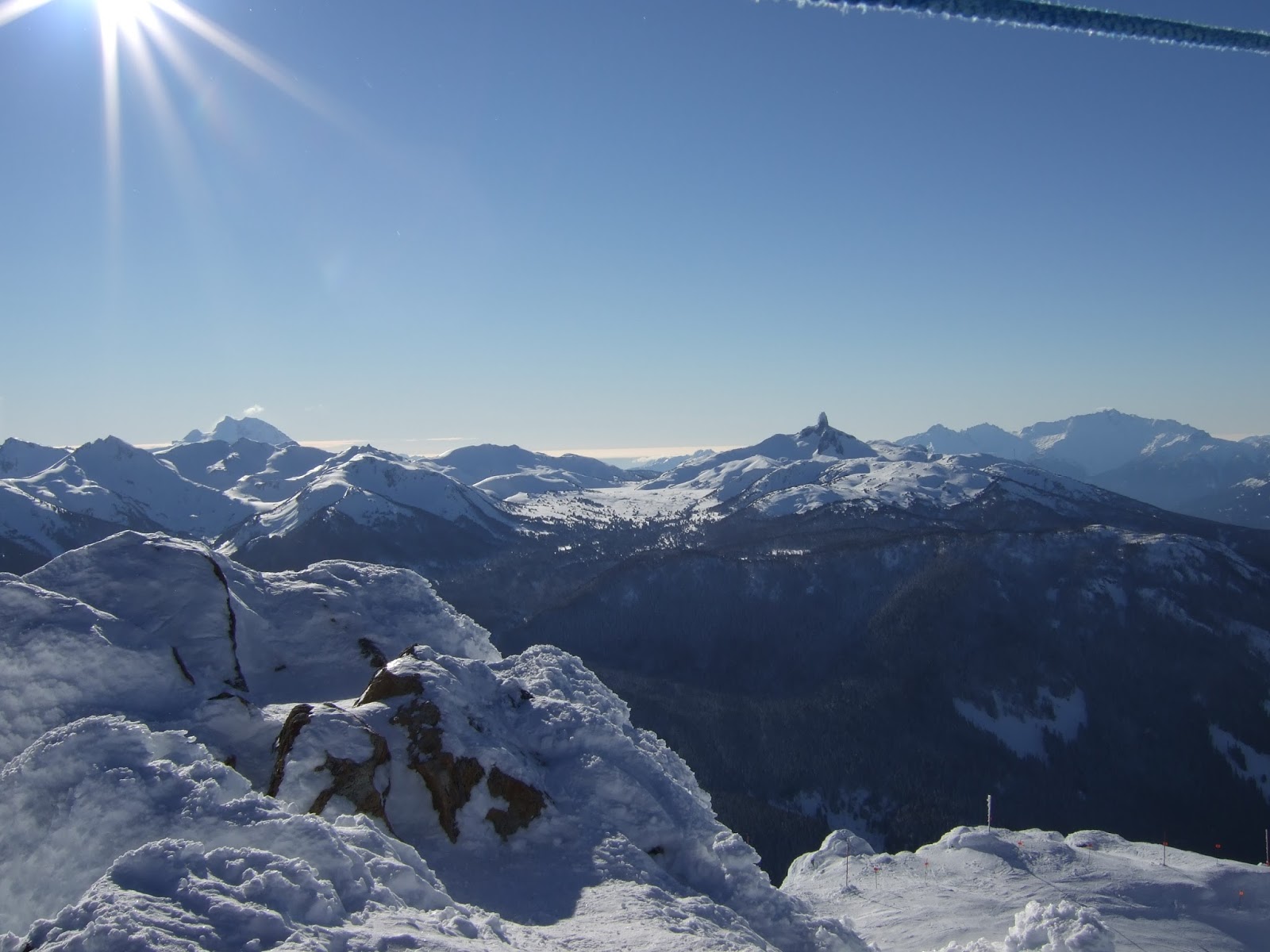
So I miss the Best Little Greenhouse in Texas, but there are plenty of excellent qualities in my current gardening situation, so I can't really complain. My friend Mary sent me a card recently, and as usual, she has captured my feelings to perfection.